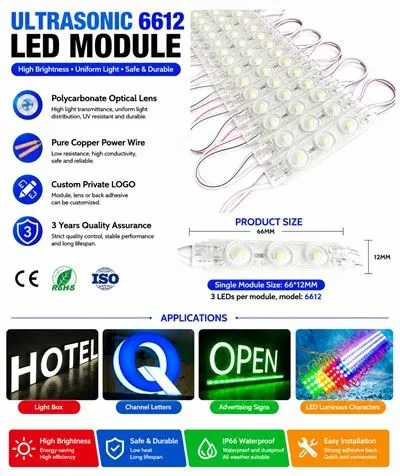
As a trusted supplier of 5050 LED RGB Modules, I often encounter inquiries from customers about how to control multiple 5050 LED RGB Modules simultaneously. In this blog post, I will share some practical methods and considerations to help you achieve this goal effectively.
Understanding the Basics of 5050 LED RGB Modules
Before delving into the control methods, it's essential to understand the fundamental characteristics of 5050 LED RGB Modules. These modules are widely used in various lighting applications due to their high brightness, energy efficiency, and color-changing capabilities. Each 5050 LED RGB Module consists of three primary colors - red, green, and blue - which can be combined to create a wide spectrum of colors.
The 5050 LED RGB Modules typically operate on a low-voltage power supply, such as 12V or 24V. They can be connected in series or parallel to achieve the desired lighting effect. However, when connecting multiple modules, it's crucial to ensure that the power supply can provide sufficient current to meet the requirements of all the modules.
Methods for Controlling Multiple 5050 LED RGB Modules Simultaneously
1. Using a Single Controller
One of the simplest ways to control multiple 5050 LED RGB Modules simultaneously is to use a single controller. A controller is a device that allows you to adjust the color, brightness, and lighting effects of the LED modules. There are various types of controllers available on the market, including remote control, DMX controller, and Wi-Fi controller.
- Remote Control: A remote control is a convenient option for controlling LED modules. It allows you to adjust the color, brightness, and lighting effects of the modules from a distance. Most remote controls support multiple channels, which means you can control different groups of LED modules independently.
- DMX Controller: A DMX controller is a professional-grade device that is commonly used in stage lighting and architectural lighting applications. It allows you to control a large number of LED modules simultaneously with high precision. DMX controllers use the DMX protocol to communicate with the LED modules, which provides a standardized way of controlling lighting devices.
- Wi-Fi Controller: A Wi-Fi controller is a modern option that allows you to control the LED modules using your smartphone or tablet. It connects to your home Wi-Fi network, which means you can control the modules from anywhere in the world as long as you have an internet connection. Wi-Fi controllers often come with a mobile app that provides a user-friendly interface for adjusting the color, brightness, and lighting effects of the modules.
2. Daisy-Chaining the Modules
Another method for controlling multiple 5050 LED RGB Modules simultaneously is to daisy-chain the modules. Daisy-chaining involves connecting the modules in a series, where the output of one module is connected to the input of the next module. This method allows you to control all the modules using a single controller.
When daisy-chaining the modules, it's important to ensure that the power supply can provide sufficient current to all the modules. You also need to make sure that the signal from the controller can reach all the modules without significant loss. To achieve this, you may need to use a signal amplifier or a repeater.
3. Using a Distribution Box
A distribution box is a device that allows you to split the power and signal from a single controller to multiple LED modules. It provides a convenient way to connect and control a large number of modules. Distribution boxes typically have multiple output channels, which means you can connect different groups of LED modules to each channel.
When using a distribution box, it's important to ensure that the power supply can provide sufficient current to all the modules connected to the box. You also need to make sure that the signal from the controller can reach all the modules without significant loss. To achieve this, you may need to use a signal amplifier or a repeater.
Considerations for Controlling Multiple 5050 LED RGB Modules Simultaneously
1. Power Supply
As mentioned earlier, when connecting multiple 5050 LED RGB Modules, it's crucial to ensure that the power supply can provide sufficient current to meet the requirements of all the modules. You need to calculate the total power consumption of all the modules and choose a power supply that can provide at least the same amount of power.
It's also important to consider the voltage drop when connecting the modules in a long chain. Voltage drop occurs when the electrical resistance of the wire causes a decrease in voltage along the length of the wire. To minimize voltage drop, you can use a thicker wire or a shorter wire length.
2. Signal Transmission
When controlling multiple 5050 LED RGB Modules simultaneously, it's important to ensure that the signal from the controller can reach all the modules without significant loss. You need to choose a controller that can provide a strong enough signal and use a high-quality wire for signal transmission.
If you are using a long wire length or a large number of modules, you may need to use a signal amplifier or a repeater to boost the signal strength. A signal amplifier is a device that amplifies the signal from the controller, while a repeater is a device that regenerates the signal and sends it to the next module.
3. Compatibility
When choosing a controller or a distribution box, it's important to ensure that it is compatible with the 5050 LED RGB Modules you are using. You need to check the specifications of the controller or the distribution box to make sure that it supports the same voltage, current, and signal protocol as the modules.


Recommended Products for Controlling Multiple 5050 LED RGB Modules Simultaneously
As a supplier of 5050 LED RGB Modules, I recommend the following products for controlling multiple modules simultaneously:
- Square Led Module 220V: This square LED module is designed for use with a 220V power supply. It is easy to install and provides a high level of brightness and color accuracy.
- 12V Led Module Light: This 12V LED module is a popular choice for use in various lighting applications. It is energy-efficient and provides a wide range of color options.
- High Quality IP68 Waterproof Backlight 12v LED Module: This IP68 waterproof backlight LED module is designed for use in outdoor and wet environments. It is highly durable and provides a high level of brightness and color accuracy.
Conclusion
Controlling multiple 5050 LED RGB Modules simultaneously is a challenging but achievable task. By understanding the basics of the modules, choosing the right control method, and considering the power supply, signal transmission, and compatibility, you can achieve the desired lighting effect.
If you have any questions or need further assistance with controlling multiple 5050 LED RGB Modules, please feel free to contact us. We are a professional supplier of LED lighting products and can provide you with high-quality products and excellent customer service.
References
- LED Lighting Handbook, Third Edition, by John C. Linvill
- Lighting Controls Association (LCA) Guidelines for Lighting Control Systems