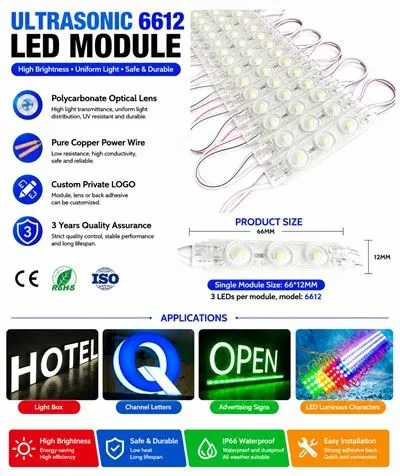
As a supplier of 1.5W LED module lights, I often get asked about the light beam quality of these products. In this blog post, I'll delve into what light beam quality means, how it's measured, and what factors affect the light beam quality of a 1.5W LED module light.
Understanding Light Beam Quality
Light beam quality is a crucial aspect of any lighting system, as it directly impacts the lighting experience and the effectiveness of the illumination. It encompasses several key characteristics, including beam angle, beam uniformity, color consistency, and intensity distribution.
Beam Angle
The beam angle refers to the spread of the light emitted by the LED module. It is typically measured in degrees and can have a significant impact on the lighting effect. A narrow beam angle, such as 15° or 20°, produces a focused, spotlight-like effect, making it ideal for highlighting specific objects or areas. On the other hand, a wide beam angle, such as 60° or 120°, provides a more diffuse and widespread illumination, suitable for general lighting purposes.
In the case of a 1.5W LED module light, the beam angle can vary depending on the design and application. For example, a Cob Led Module 12v may have a relatively wide beam angle to provide even illumination over a larger area, while a 3030 LED Side Lighting might have a more focused beam angle for accent lighting.
Beam Uniformity
Beam uniformity refers to how evenly the light is distributed across the illuminated area. A high-quality light beam should have minimal hotspots (areas of concentrated light) and dark spots (areas with little or no light). Good beam uniformity ensures that the entire area is illuminated consistently, without any noticeable variations in brightness.
Achieving high beam uniformity in a 1.5W LED module light requires careful design and engineering. This includes the use of advanced optics and reflectors to control the light distribution and minimize glare. The quality of the LED chips and the manufacturing process also play a crucial role in ensuring beam uniformity.
Color Consistency
Color consistency is another important aspect of light beam quality. It refers to the ability of the LED module to produce light with a consistent color temperature and color rendering index (CRI) over time and across different units. A high CRI value, typically above 90, indicates that the light can accurately render colors, making objects appear more vibrant and true to life.
In a 1.5W LED module light, color consistency is achieved through the use of high-quality LED chips and precise color calibration during the manufacturing process. This ensures that the light produced has a stable color temperature and a high CRI, providing a more natural and pleasant lighting environment.
Intensity Distribution
Intensity distribution describes how the light intensity varies within the beam. A well-designed light beam should have a smooth and predictable intensity distribution, with the highest intensity at the center of the beam gradually decreasing towards the edges. This ensures that the light is focused where it is needed most while still providing adequate illumination in the surrounding areas.
Factors Affecting the Light Beam Quality of a 1.5W LED Module Light
Several factors can affect the light beam quality of a 1.5W LED module light. Understanding these factors can help in selecting the right product and ensuring optimal performance.


LED Chip Quality
The quality of the LED chips used in the module is one of the most critical factors influencing light beam quality. High-quality LED chips are more efficient, have better color consistency, and can produce a more uniform light beam. They are also more reliable and have a longer lifespan, reducing the need for frequent replacements.
When choosing a 1.5W LED module light, it's important to look for products that use high-quality LED chips from reputable manufacturers. These chips are typically tested and certified to meet strict quality standards, ensuring consistent performance and reliability.
Optics and Reflectors
The design and quality of the optics and reflectors used in the LED module also play a significant role in determining light beam quality. Optics are used to control the direction and spread of the light, while reflectors help to enhance the light output and improve beam uniformity.
Advanced optics and reflectors can be used to create a variety of beam patterns, such as narrow, wide, or elliptical beams. They can also be designed to minimize glare and improve color mixing, resulting in a more pleasant and efficient lighting experience.
Heat Management
Heat is one of the biggest enemies of LED performance. Excessive heat can cause the LED chips to degrade over time, leading to a decrease in light output, color shift, and reduced lifespan. Effective heat management is therefore essential for maintaining the light beam quality of a 1.5W LED module light.
Good heat management involves the use of heat sinks, thermal pads, and other cooling mechanisms to dissipate heat away from the LED chips. This helps to keep the temperature of the chips within a safe operating range, ensuring consistent performance and reliability.
Manufacturing Process
The manufacturing process of the LED module can also have a significant impact on light beam quality. A well-controlled manufacturing process ensures that the components are assembled correctly, the LED chips are properly mounted and wired, and the optics and reflectors are aligned accurately.
Quality control measures, such as testing and inspection at various stages of the manufacturing process, are essential for ensuring that each LED module meets the required specifications. This helps to minimize variations in light beam quality between different units and ensures consistent performance over time.
Measuring Light Beam Quality
To accurately assess the light beam quality of a 1.5W LED module light, several measurement techniques and tools can be used.
Photometric Testing
Photometric testing is used to measure the light output, beam angle, and intensity distribution of the LED module. This involves using a goniophotometer, which is a specialized instrument that measures the light intensity at different angles around the module.
The data obtained from photometric testing can be used to create a photometric curve, which provides a detailed representation of the light beam characteristics. This information is useful for comparing different products and selecting the one that best meets the specific lighting requirements.
Colorimetry
Colorimetry is used to measure the color temperature and color rendering index (CRI) of the LED module. This involves using a spectrophotometer, which analyzes the spectral distribution of the light emitted by the module.
The color temperature is measured in Kelvin (K) and indicates the perceived color of the light, ranging from warm (low Kelvin values) to cool (high Kelvin values). The CRI is a measure of how accurately the light can render colors compared to a reference light source, with a value of 100 representing perfect color rendering.
Conclusion
In conclusion, the light beam quality of a 1.5W LED module light is a complex and multi-faceted concept that encompasses several key characteristics, including beam angle, beam uniformity, color consistency, and intensity distribution. Understanding these characteristics and the factors that affect them is essential for selecting the right product and ensuring optimal performance.
As a supplier of 1.5W LED module lights, we are committed to providing high-quality products that meet the highest standards of light beam quality. Our Cob Led Module 12v, 3030 LED Side Lighting, and AC 110V 220V Led Module Ip65 are designed and manufactured using the latest technology and highest-quality components to ensure superior performance and reliability.
If you are interested in learning more about our 1.5W LED module lights or have any questions about light beam quality, please feel free to contact us. We would be happy to assist you in selecting the right product for your specific needs and provide you with all the information you need to make an informed decision.
References
- "LED Lighting Handbook," edited by Yoshi Ohno, Wiley-IEEE Press, 2010.
- "Solid-State Lighting Technology and Applications," by Jerry Simons, CRC Press, 2012.
- "Photometry and Colorimetry for LED Lighting," by Frank J. C. M. Driessen, SPIE Press, 2015.