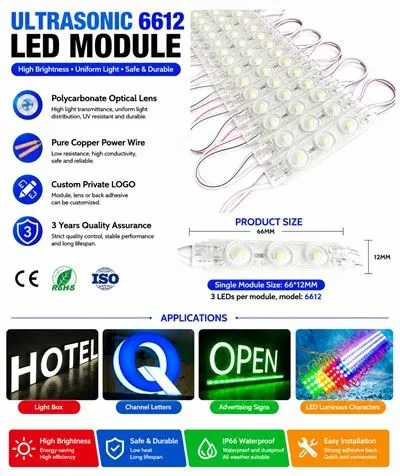
Hey there! As a supplier of 5050 RGBW Light Modules, I often get asked about the luminous flux of these nifty little things. So, I thought I'd take a moment to break it down for you and give you a better understanding of what it means and why it matters.
First off, let's talk about what luminous flux actually is. In simple terms, luminous flux is a measure of the total amount of visible light emitted by a light source. It's measured in lumens (lm), and it gives you an idea of how bright a light is. The higher the luminous flux, the brighter the light.
Now, when it comes to the 5050 RGBW Light Module, the luminous flux can vary depending on a few factors. One of the main factors is the color of the light. Different colors have different levels of brightness, so the luminous flux will be different for each color. For example, white light typically has a higher luminous flux than red, green, or blue light.
Another factor that can affect the luminous flux is the power consumption of the module. Generally speaking, the more power a module consumes, the higher the luminous flux will be. However, it's important to note that this isn't always the case. Some modules are designed to be more energy-efficient, so they can produce a high luminous flux while using less power.
So, what's the typical luminous flux of a 5050 RGBW Light Module? Well, it can range anywhere from around 20 lumens to over 100 lumens per module. The exact luminous flux will depend on the specific module you're using and the settings you have it on.
If you're looking for a high-luminous-flux option, you might want to consider a module with a higher power rating. However, keep in mind that these modules will also consume more energy, so they might not be the best choice if you're trying to save on your electricity bill.
On the other hand, if you're looking for a more energy-efficient option, you might want to consider a module with a lower power rating. These modules will typically have a lower luminous flux, but they'll also use less energy, which can save you money in the long run.
Now, let's talk about why the luminous flux of a 5050 RGBW Light Module matters. Well, if you're using these modules for lighting purposes, the luminous flux will determine how bright your lights will be. If you're using them for a small area, such as a display case or a sign, you might not need a very high luminous flux. However, if you're using them for a larger area, such as a room or a stage, you'll probably want a higher luminous flux to ensure that the area is well-lit.


In addition to the brightness, the luminous flux can also affect the color rendering of the light. Color rendering refers to how accurately a light source can reproduce the colors of objects. A higher luminous flux generally means better color rendering, which can make your lights look more vibrant and true to life.
So, now that you have a better understanding of what the luminous flux of a 5050 RGBW Light Module is and why it matters, you might be wondering how to choose the right module for your needs. Well, here are a few things to consider:
- The area you're lighting: As I mentioned earlier, the size of the area you're lighting will determine how high of a luminous flux you need. If you're lighting a small area, you can probably get away with a lower luminous flux. However, if you're lighting a large area, you'll need a higher luminous flux.
- The color you want: Different colors have different levels of brightness, so you'll need to consider the color you want when choosing a module. If you want a bright white light, you'll need a module with a higher luminous flux. If you want a more subdued color, such as red or blue, you can probably get away with a lower luminous flux.
- Your energy efficiency goals: If you're trying to save on your electricity bill, you'll want to choose a module with a lower power rating. However, keep in mind that these modules will typically have a lower luminous flux.
- Your budget: Finally, you'll need to consider your budget when choosing a module. Modules with a higher luminous flux and better color rendering will generally be more expensive than modules with a lower luminous flux and poorer color rendering.
At our company, we offer a wide range of 5050 RGBW Light Modules with different luminous fluxes and power ratings to meet your needs. Whether you're looking for a high-luminous-flux option for a large area or a more energy-efficient option for a small area, we have the perfect module for you.
If you're interested in learning more about our 5050 RGBW Light Modules or if you have any questions about luminous flux or any other aspect of our products, please don't hesitate to reach out to us. We'd be happy to help you choose the right module for your needs and answer any questions you might have.
In addition to our 5050 RGBW Light Modules, we also offer a variety of other LED modules, including 3 Led Module for Lightbox, AC 110V 220V Led Module Ip65, and Ultrasonic Led Modules For Sign Letters. These modules are designed for a variety of applications, including lighting, signage, and displays.
So, if you're in the market for LED modules, be sure to check out our website or contact us today to learn more about our products and how they can meet your needs. We look forward to hearing from you!
References:
- "Luminous Flux." Wikipedia. Accessed [Date].
- "LED Lighting Basics." Energy.gov. Accessed [Date].