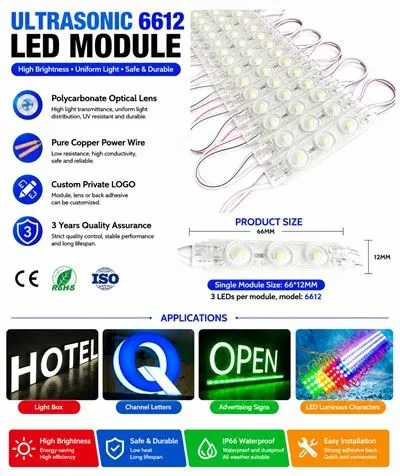
As a supplier of 5050 RGBW Light Modules, I often get asked about the maximum operating temperature of these modules. Understanding this aspect is crucial for ensuring their long - term performance, reliability, and safety. In this blog, I will delve into the factors that influence the maximum operating temperature of 5050 RGBW Light Modules, how to manage it, and why it matters.
Understanding the 5050 RGBW Light Module
Before we discuss the maximum operating temperature, let's briefly understand what a 5050 RGBW Light Module is. The "5050" refers to the physical dimensions of the LED chip, which are 5.0mm x 5.0mm. RGBW stands for Red, Green, Blue, and White, meaning these modules can produce a wide range of colors, including a pure white light. These modules are popular in various applications such as decorative lighting, signage, and stage lighting due to their high brightness and color - mixing capabilities.
Factors Influencing the Maximum Operating Temperature
1. LED Chip Technology
The type of LED chip used in the 5050 RGBW Light Module plays a significant role in determining its maximum operating temperature. Different chip manufacturers use various materials and manufacturing processes, which can result in different heat - dissipation characteristics. For example, some high - quality LED chips are designed with better internal structures that allow for more efficient heat transfer from the active region of the chip to the surrounding environment.
2. Power Consumption
Higher power consumption generally leads to more heat generation. The 5050 RGBW Light Modules can consume different amounts of power depending on the intensity of the light they are producing. When all the colors (red, green, blue, and white) are at full brightness, the power consumption is at its peak, and so is the heat generation. Therefore, the maximum operating temperature can be affected by how the module is being used in terms of brightness settings.
3. Heat Dissipation Design
The design of the module itself also impacts heat dissipation. Modules with better heat - sinking features, such as larger metal substrates or heat - conducting materials, can transfer heat away from the LED chips more effectively. Additionally, the layout of the components on the module can influence air circulation, which is another important factor in heat dissipation. If the module is enclosed in a tight space with poor ventilation, the heat will accumulate, leading to a higher operating temperature.
Typical Maximum Operating Temperature Range
In general, the maximum operating temperature of a 5050 RGBW Light Module typically ranges from 60°C to 85°C. However, this can vary depending on the specific product and its design. Some high - performance modules may be able to operate at slightly higher temperatures, while others may have a lower maximum limit.
It's important to note that operating the module close to or at its maximum temperature for extended periods can have several negative effects. Firstly, it can significantly reduce the lifespan of the LED chips. LEDs are semiconductor devices, and high temperatures can accelerate the degradation of the semiconductor materials, leading to a decrease in light output over time. Secondly, it can also affect the color accuracy of the module. The different colors (red, green, blue, and white) may be affected differently by high temperatures, resulting in color shifts and inconsistent lighting.
Managing the Operating Temperature
1. Proper Installation
When installing the 5050 RGBW Light Modules, it's essential to ensure proper ventilation. Avoid enclosing the modules in sealed containers without any heat - dissipation provisions. If possible, mount the modules on a heat - conducting surface, such as a metal panel, which can act as a heat sink.
2. Power Management
Adjust the brightness settings according to the application requirements. If full brightness is not necessary, reducing the power consumption can help lower the operating temperature. Some lighting control systems allow for dimming, which can be an effective way to manage heat generation.


3. Use of Cooling Devices
In some high - demand applications where the modules are required to operate at high brightness for long periods, additional cooling devices such as fans or heat pipes can be used. These devices can enhance the heat - dissipation process and keep the operating temperature within a safe range.
Related Products in Our Catalog
As a supplier, we offer a variety of related LED products. For instance, we have the Waterproof IP68 Led Module 12V White, which is suitable for outdoor applications where water resistance is crucial. Our 1.5w Led Modules For Signs are ideal for signage, providing bright and energy - efficient lighting. And if you need a module that can operate on a 220V power supply, our 220v Square Led Module is a great choice.
Conclusion and Call to Action
Understanding the maximum operating temperature of 5050 RGBW Light Modules is essential for their proper use and long - term performance. By considering the factors that influence the temperature, taking appropriate measures to manage it, and choosing the right products for your specific needs, you can ensure that your lighting system functions optimally.
If you are interested in purchasing 5050 RGBW Light Modules or any of our other LED products, we encourage you to get in touch with us. We have a team of experts who can provide you with detailed product information, technical support, and help you find the best solutions for your lighting projects. Whether you are a small - scale DIY enthusiast or a large - scale commercial customer, we are here to meet your requirements.
References
- LED Lighting Handbook, Various Authors
- Technical Documentation from LED Chip Manufacturers