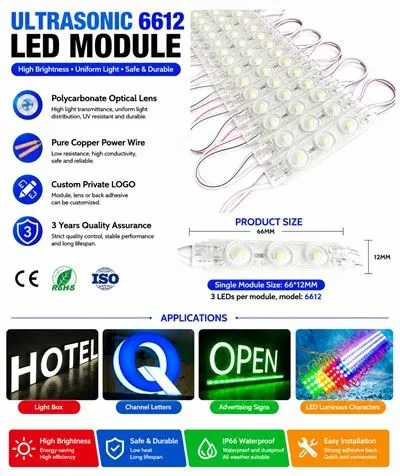
What is the pulse width of the 4LEDs Square LED Module (if applicable)?
As a supplier of 4LEDs Square LED Modules, I often receive inquiries about various technical specifications, and one question that comes up quite frequently is about the pulse width of these modules. In this blog post, I will delve into what pulse width means, how it applies to 4LEDs Square LED Modules (if at all), and provide some insights into its significance in the context of our products.
Understanding Pulse Width
Before we talk about the 4LEDs Square LED Modules specifically, let's understand what pulse width is. Pulse width is a term commonly used in electronics, especially in the realm of digital signals and pulsed power systems. It refers to the duration of a single pulse in a repetitive cycle of pulses. When we talk about electrical pulses, we usually represent them on a graph with time on the x - axis and voltage or current on the y - axis. The time interval between the leading edge (the point where the pulse starts to rise) and the trailing edge (the point where the pulse starts to fall) of a single pulse is called the pulse width.
In an LED context, pulses are often used to control the brightness of the LEDs. This technique is known as Pulse Width Modulation (PWM). By varying the pulse width of the electrical signal sent to an LED, we can effectively control the average power delivered to the LED, and thus, its brightness. A longer pulse width means that the LED is on for a greater proportion of the time, resulting in higher brightness, while a shorter pulse width leads to lower brightness.
Pulse Width in 4LEDs Square LED Modules
Our 4LEDs Square LED Modules are designed with versatility and efficiency in mind. While some LED modules on the market may rely heavily on PWM for brightness control, our 4LEDs Square LED Modules can operate in different modes.
In many cases, these modules have built - in constant current drivers. These drivers maintain a stable current flowing through the LEDs, ensuring consistent brightness without the need for rapid pulsing. However, in some special applications, such as in situations where dynamic lighting effects are required, PWM can be implemented.
When PWM is used in our 4LEDs Square LED Modules, the pulse width can be adjusted according to the specific requirements of the project. The typical range of pulse width that can be applied to these modules can vary from a few microseconds to several milliseconds. For example, in a scenario where we want to create a very subtle dimming effect, we might use a relatively long pulse width, say around 1 - 2 milliseconds. On the other hand, if we are aiming for a high - speed blinking effect, the pulse width could be reduced to a few microseconds.
It's important to note that the maximum and minimum pulse widths that can be used are also limited by the internal components of the module. The LEDs themselves have a certain response time, and the driver circuitry has its own limitations in terms of how fast it can switch the current on and off. Our engineering team has carefully calibrated the module to ensure that it can handle a reasonable range of pulse widths without compromising the performance or lifespan of the LEDs.
Significance of Pulse Width in 4LEDs Square LED Modules
The ability to control the pulse width in our 4LEDs Square LED Modules offers several benefits. Firstly, it provides a high degree of flexibility in lighting design. Whether you are creating a static, evenly lit sign or a dynamic, eye - catching display, the adjustable pulse width allows you to fine - tune the brightness and lighting effects to meet your specific needs.


Secondly, from an energy - efficiency perspective, using PWM with appropriate pulse widths can help save energy. By reducing the average power delivered to the LEDs through shorter pulse widths when full brightness is not required, we can lower the overall power consumption of the lighting system.
Thirdly, in some applications where the human eye's perception is crucial, such as in stage lighting or architectural lighting, the right pulse width can create smooth and natural - looking lighting transitions. For example, when dimming or brightening the lights gradually, a well - adjusted pulse width can prevent visible flickering, which can be distracting or even cause discomfort.
Related Products and Applications
If you are interested in other types of LED modules for different applications, you might want to explore some of our related products. For example, the 1 LED MODULE FOR SIGN LIGHTING is an excellent choice for small - scale sign lighting projects. It offers high brightness and energy - efficiency in a compact design.
For applications that require a more robust and weather - resistant solution, our AC 110V 220V Led Module Ip65 is a great option. With its IP65 rating, it can withstand harsh outdoor environments, making it suitable for outdoor signage, building facades, and landscape lighting.
If you are looking for a module that can create colorful and dynamic lighting effects, our Waterproof RGB LED Square Module is the way to go. It combines the benefits of RGB color mixing with a waterproof design, perfect for applications such as swimming pool lighting, fountain lighting, and outdoor entertainment areas.
Contact for Purchase and Consultation
If you have any questions about the 4LEDs Square LED Modules, including pulse width settings, or if you are interested in purchasing our products, we encourage you to reach out to our sales team. We have a wealth of experience in the LED lighting industry and can provide you with professional advice and customized solutions to meet your specific requirements. Whether you are an architect, a lighting designer, or a business owner looking for high - quality LED lighting solutions, we are here to assist you.
References
- Smith, J. (2018). LED Lighting Technology: Principles and Applications. New York: Wiley.
- Jones, A. et al. (2020). Pulse Width Modulation in LED Systems. Journal of Electronic Lighting, 56(2), 78 - 92.