What is the voltage requirement for SMD Led Module?
As a supplier of SMD LED modules, I often get asked about the voltage requirements for these versatile lighting components. Understanding the voltage needs of SMD LED modules is crucial for ensuring their proper functioning, longevity, and overall performance. In this blog post, I'll delve into the details of SMD LED module voltage requirements, factors that influence them, and how to choose the right voltage for your specific applications.
Understanding SMD LED Modules
Surface Mount Device (SMD) LED modules are compact, energy - efficient lighting solutions that have gained widespread popularity in various industries, including signage, automotive, and general illumination. These modules consist of multiple SMD LEDs mounted on a printed circuit board (PCB), which are then encapsulated to protect them from environmental factors.
The SMD LEDs themselves are semiconductor devices that emit light when an electric current passes through them. The amount of light output and the color of the light are determined by the materials used in the semiconductor and the electrical characteristics of the LED.
Basic Voltage Requirements
The voltage requirement of an SMD LED module is primarily determined by the forward voltage of the individual SMD LEDs within the module. The forward voltage (Vf) is the voltage drop across the LED when it is conducting current in the forward direction. Different types of SMD LEDs have different forward voltage values, which typically range from about 1.8V to 3.6V depending on the color and the specific LED chip technology.


For example, red SMD LEDs usually have a forward voltage of around 1.8 - 2.2V, while blue and white SMD LEDs typically have a forward voltage of 3.0 - 3.6V. Green SMD LEDs fall somewhere in between, with a forward voltage of about 2.2 - 2.8V.
When multiple SMD LEDs are connected in series within a module, the total forward voltage of the module is the sum of the forward voltages of the individual LEDs. For instance, if a module has three red SMD LEDs connected in series, and each LED has a forward voltage of 2V, the total forward voltage of the module will be 6V.
On the other hand, when SMD LEDs are connected in parallel, the forward voltage of the module remains the same as that of a single LED, but the current capacity of the module increases.
Factors Influencing Voltage Requirements
Several factors can influence the voltage requirements of an SMD LED module:
- LED Color: As mentioned earlier, different colors of SMD LEDs have different forward voltage values. This is due to the different semiconductor materials used to produce different colors of light. For example, the energy bandgap of the semiconductor material used in blue LEDs is larger than that of red LEDs, which results in a higher forward voltage.
- LED Quantity and Configuration: The number of SMD LEDs in a module and how they are connected (series, parallel, or a combination of both) significantly affect the voltage requirement. A module with more LEDs connected in series will have a higher total forward voltage compared to a module with fewer LEDs or LEDs connected in parallel.
- Operating Temperature: The forward voltage of SMD LEDs is also affected by temperature. Generally, as the temperature increases, the forward voltage of the LEDs decreases. This means that the voltage requirement of an SMD LED module may change slightly depending on the operating environment.
- Desired Brightness: The brightness of an SMD LED is directly related to the current flowing through it. To achieve a higher brightness level, more current is required. However, increasing the current also affects the voltage drop across the LED. Therefore, if you want a brighter module, you may need to adjust the power supply voltage accordingly.
Choosing the Right Voltage for Your Application
When selecting an SMD LED module for your application, it's essential to choose the right voltage to ensure optimal performance. Here are some steps to help you make the right decision:
- Determine Your Application Requirements: First, consider the specific requirements of your application, such as the desired brightness, color, and size of the lighting area. This will help you narrow down the type of SMD LED module you need.
- Check the Module Specifications: Look for the technical specifications of the SMD LED module, which should include the forward voltage, current rating, and recommended operating conditions. Make sure the voltage of the power supply you plan to use is compatible with the module's voltage requirements.
- Consider Power Supply Options: There are various types of power supplies available for SMD LED modules, including constant - voltage and constant - current power supplies. Constant - voltage power supplies provide a fixed voltage output, while constant - current power supplies maintain a constant current through the LEDs. For most SMD LED modules, a constant - current power supply is recommended to ensure stable and consistent light output.
- Account for Voltage Tolerance: Keep in mind that there may be some voltage tolerance in the SMD LED module and the power supply. It's important to choose a power supply that can provide a voltage within the acceptable tolerance range of the module to avoid over - or under - driving the LEDs.
Our Product Offerings
At our company, we offer a wide range of SMD LED modules with different voltage requirements to meet the diverse needs of our customers. Some of our popular products include:
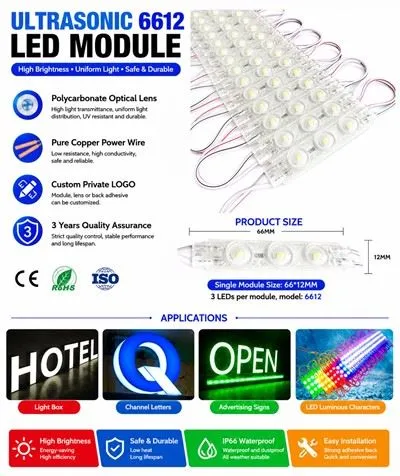
- Ultrasonic Led Modules For Sign Letters: These modules are specifically designed for sign letters and offer excellent brightness and energy efficiency. They come in various voltage options to suit different sign designs.
- High Quality IP68 Waterproof Backlight 12v LED Module: Ideal for outdoor applications, these modules are waterproof and have a 12V voltage requirement. They provide reliable backlighting for various displays and signage.
- High Power 2led Module For Sign: If you need a high - power solution for your sign, these modules are a great choice. They offer high brightness and are available in different voltage configurations.
Contact Us for Procurement
If you're interested in purchasing SMD LED modules or have any questions about their voltage requirements, we're here to help. Our team of experts can provide you with detailed information about our products, assist you in choosing the right voltage for your application, and offer competitive pricing. Contact us today to start the procurement process and take your lighting projects to the next level.
References
- "LED Lighting Handbook" by Bob Johnstone
- Manufacturer datasheets of SMD LED components