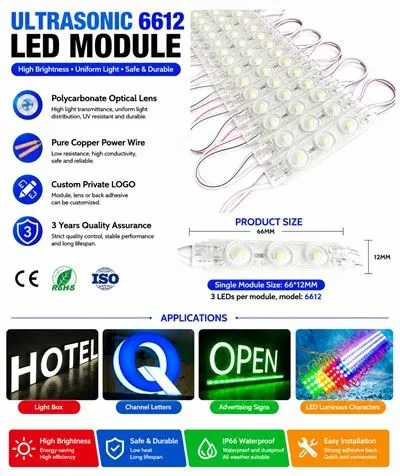
Connecting multiple SMD (Surface-Mount Device) LED modules together can seem like a daunting task, especially if you're new to working with LEDs. However, with the right knowledge and approach, it can be a straightforward process. As a trusted SMD LED module supplier, I'm here to guide you through the steps and considerations for successfully connecting multiple SMD LED modules.
Understanding SMD LED Modules
Before we dive into the connection process, it's essential to understand what SMD LED modules are. SMD LED modules are compact, pre - assembled units that contain multiple SMD LEDs. These modules come in various sizes, colors, and configurations, making them suitable for a wide range of applications, including lighting displays, signage, and backlighting.
Types of SMD LED Modules
We offer a diverse range of SMD LED modules to meet different customer needs. For example, the 12v RGB LED Module with IC is a popular choice for creating dynamic color - changing lighting effects. It comes with an integrated circuit that allows for easy control of the RGB colors.
The 12v 1.5w Led Backlight Module is ideal for backlighting applications such as LCD screens or display cases. It provides a uniform and bright light source.
Our IP68 Waterproof Square RGB LED Module light is designed for outdoor use. With its high - level waterproof rating, it can withstand harsh weather conditions while still delivering vibrant RGB lighting.
Connection Methods
There are two primary methods for connecting multiple SMD LED modules together: series connection and parallel connection.
Series Connection
In a series connection, the positive terminal of one LED module is connected to the negative terminal of the next module. The advantage of a series connection is that the same current flows through all the modules. This can be beneficial when you want to ensure uniform brightness across all the LEDs.
However, there are also some drawbacks. If one module fails in a series connection, the entire circuit will be broken, and all the LEDs will stop working. Additionally, the total voltage required for the circuit is the sum of the voltages of each individual module. So, if you have three 12 - volt modules connected in series, you'll need a 36 - volt power supply.
To connect SMD LED modules in series, follow these steps:
- Identify the positive (+) and negative (-) terminals of each module. Usually, the positive terminal is marked with a plus sign or a longer lead.
- Connect the positive terminal of the first module to the negative terminal of the second module using a suitable wire. Make sure the connection is secure to avoid loose contacts.
- Repeat the process for all the modules you want to connect in series.
- Connect the positive terminal of the power supply to the positive terminal of the first module in the series, and the negative terminal of the power supply to the negative terminal of the last module in the series.
Parallel Connection
In a parallel connection, all the positive terminals of the LED modules are connected together, and all the negative terminals are connected together. The main advantage of a parallel connection is that if one module fails, the other modules will continue to work. Also, the voltage across each module is the same as the voltage of the power supply.
However, parallel connections require a higher current from the power supply. Each module draws its own current, and the total current required is the sum of the currents of all the modules.
To connect SMD LED modules in parallel, follow these steps:
- Identify the positive and negative terminals of each module.
- Connect all the positive terminals of the modules together using a wire. You can use a terminal block or solder the wires together for a more permanent connection.
- Connect all the negative terminals of the modules together in the same way.
- Connect the positive and negative terminals of the power supply to the respective common positive and negative connections of the modules.
Power Supply Considerations
Choosing the right power supply is crucial when connecting multiple SMD LED modules. You need to consider both the voltage and current requirements of the modules.
As mentioned earlier, in a series connection, the total voltage required is the sum of the voltages of each module. In a parallel connection, the voltage of the power supply should match the voltage rating of each module.
For the current, you need to calculate the total current drawn by all the modules. Check the datasheet of each module to find out its current consumption. Then, add up the currents of all the modules to determine the minimum current rating of the power supply.
It's also a good idea to choose a power supply with a slightly higher current rating than the calculated value to account for any fluctuations or future expansions.
Control Systems
If you want to control the lighting effects of your connected SMD LED modules, you'll need a control system. For RGB LED modules, you can use a controller that allows you to change the colors, brightness, and patterns.
Some controllers are simple and can be operated manually, while others can be controlled via a smartphone app or a computer. When choosing a controller, make sure it is compatible with the type of LED modules you have and the power supply you're using.
Safety Precautions
When working with SMD LED modules and electrical connections, safety should always be your top priority. Here are some safety precautions to keep in mind:


- Always disconnect the power supply before making any connections or adjustments to the LED modules.
- Use insulated tools to avoid electrical shocks.
- Make sure all the connections are secure to prevent short circuits.
- Do not overload the power supply. Make sure the power supply can handle the total power requirements of the connected modules.
Testing and Troubleshooting
After connecting the SMD LED modules, it's important to test the circuit to make sure everything is working properly. Here are some steps for testing and troubleshooting:
- Re - check all the connections to ensure they are correct and secure.
- Connect the power supply and turn it on. Observe the LEDs to see if they light up.
- If some LEDs are not working, check for loose connections or damaged modules. You can use a multimeter to test the voltage and continuity of the circuit.
- If the LEDs are too dim or too bright, check the power supply voltage and current. Adjust the power supply if necessary.
Conclusion
Connecting multiple SMD LED modules together can open up a world of possibilities for creating unique lighting solutions. Whether you're using them for indoor or outdoor applications, understanding the connection methods, power supply requirements, and safety precautions is essential.
As a leading SMD LED module supplier, we are committed to providing high - quality products and excellent customer service. If you have any questions about connecting SMD LED modules or need help choosing the right products for your project, please feel free to contact us for procurement and further discussions. We have a team of experts who can assist you in finding the best solutions for your specific needs.
References
- LED Lighting Handbook. This comprehensive handbook provides in - depth information on LED technology, including SMD LED modules.
- Manufacturer's datasheets for SMD LED modules. These datasheets contain detailed specifications and connection diagrams for each module.