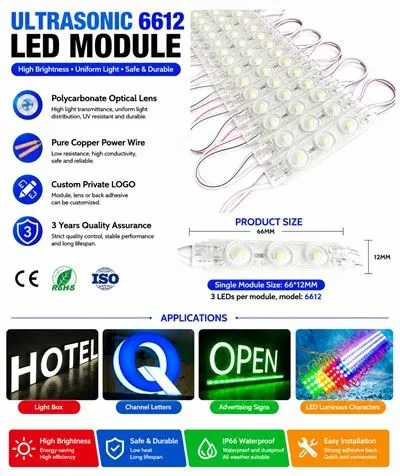
As a seasoned provider of COB LED Modules, I've witnessed firsthand the transformative power of these advanced lighting solutions in various industries. COB (Chip-on-Board) LED Modules are renowned for their high efficiency, excellent color rendering, and compact design, making them a popular choice for applications ranging from signage to general illumination. However, like any electronic device, COB LED Modules are susceptible to electromagnetic interference (EMI), which can have a significant impact on their performance and reliability. In this blog post, I'll explore the concept of EMI, its sources, and how it affects COB LED Modules. I'll also share some practical strategies for mitigating EMI to ensure the optimal performance of your lighting systems.
Understanding Electromagnetic Interference
Electromagnetic interference refers to the disruption of an electronic device's normal operation caused by electromagnetic fields. These fields can be generated by a variety of sources, both natural and man-made. Natural sources include lightning strikes and solar flares, which produce intense electromagnetic pulses that can disrupt electronic systems over a wide area. Man-made sources are far more common and include power lines, electrical appliances, radio transmitters, and other electronic devices.
EMI can be classified into two main types: conducted and radiated. Conducted EMI is transmitted through the electrical conductors, such as power cords and signal cables. It typically occurs when electrical noise from one device is transferred to another through a shared power supply or conductor. On the other hand, radiated EMI is emitted as electromagnetic waves into the surrounding environment. It can be caused by the operation of electronic devices, such as motors, transformers, and wireless communication devices, and can interfere with nearby electronic equipment.
Impact of Electromagnetic Interference on COB LED Modules
The impact of EMI on COB LED Modules can be significant and may manifest in several ways. One of the most common effects is flickering or strobing of the LED light output. EMI can cause fluctuations in the electrical current supplied to the LED chips, leading to inconsistent light emission. This not only affects the visual appearance of the lighting but can also cause eye strain and discomfort for viewers.
Another consequence of EMI is color shifting. COB LED Modules are designed to emit light with a specific color temperature and color rendering index (CRI). However, EMI can disrupt the normal operation of the LED driver, which controls the current and voltage supplied to the LED chips. This can result in a change in the color output of the LED, causing the light to appear warmer or cooler than intended.
In addition to visual effects, EMI can also cause damage to the electronic components of COB LED Modules. Excessive EMI can generate high voltages and currents that can overload and damage the LED chips, drivers, and other circuitry. This can lead to premature failure of the LED module, resulting in costly replacements and downtime.
Sources of Electromagnetic Interference in COB LED Module Applications
There are several sources of EMI that can affect COB LED Modules in different applications. In signage applications, for example, nearby electronic devices such as transformers, power supplies, and radio transmitters can generate EMI that interferes with the operation of the LED modules. In addition, the use of long cables to connect the LED modules to the power supply and control system can act as antennas, picking up and transmitting electromagnetic noise.
In general lighting applications, EMI can be generated by the electrical wiring in buildings, as well as by other electrical appliances and equipment. Fluorescent lights, for example, are known to produce significant amounts of EMI, which can interfere with the operation of nearby LED lighting systems. Power supplies and dimmer switches can also be sources of EMI, especially if they are not properly filtered or shielded.
Mitigating Electromagnetic Interference in COB LED Modules
Fortunately, there are several strategies that can be employed to mitigate the impact of EMI on COB LED Modules. One of the most effective ways is to use shielded cables to connect the LED modules to the power supply and control system. Shielded cables are designed to block electromagnetic radiation and prevent it from interfering with the electrical signals transmitted through the cable.
Another important strategy is to use EMI filters in the power supply and control system. EMI filters are designed to reduce the amount of electromagnetic noise that is transmitted through the power supply and signal lines. They can be installed at the input or output of the power supply or within the LED driver to provide additional protection against EMI.
In addition to using shielded cables and EMI filters, it is also important to design the lighting system in a way that minimizes the risk of EMI. This includes keeping the LED modules and other electronic components away from sources of electromagnetic radiation, such as motors, transformers, and radio transmitters. It also involves proper grounding and bonding of the electrical system to prevent the buildup of static electricity and electromagnetic interference.
Importance of Selecting High-Quality COB LED Modules
When it comes to mitigating the impact of EMI on COB LED Modules, selecting high-quality products is crucial. High-quality COB LED Modules are designed and manufactured to meet strict electromagnetic compatibility (EMC) standards, which ensure that they are able to operate reliably in the presence of electromagnetic interference.
At our company, we are committed to providing our customers with the highest quality COB LED Modules that are designed to withstand the rigors of real-world applications. Our LED Injection Module for Billboard is a prime example of our dedication to quality and innovation. Featuring advanced EMI shielding and filtering technology, our LED injection modules are able to provide stable and reliable performance in even the most challenging environments.
Similarly, our 3030 12V Led Modules for Signs and Led Modules For Signs are engineered to deliver exceptional performance and durability. With their high luminous efficacy, excellent color rendering, and low EMI emissions, these modules are the ideal choice for signage applications where reliability and visual appeal are paramount.


Conclusion and Call to Action
In conclusion, electromagnetic interference can have a significant impact on the performance and reliability of COB LED Modules. From flickering and color shifting to component damage and premature failure, the effects of EMI can be both costly and frustrating. However, by understanding the sources of EMI and implementing effective mitigation strategies, it is possible to minimize its impact and ensure the optimal performance of your lighting systems.
If you're looking for high-quality COB LED Modules that are designed to withstand the challenges of electromagnetic interference, look no further. Our company offers a wide range of COB LED Modules that are engineered to deliver exceptional performance, reliability, and energy efficiency. Whether you're in the market for LED Injection Module for Billboard, 3030 12V Led Modules for Signs, or Led Modules For Signs, we have the perfect solution for your needs.
Contact us today to learn more about our products and how we can help you achieve your lighting goals. Our team of experts is ready to assist you with product selection, technical support, and custom solutions. Let's work together to create lighting systems that are not only beautiful and energy-efficient but also reliable and resilient in the face of electromagnetic interference.
References
- Schmitt, R. L., & Winder, C. F. (2003). Electromagnetic Compatibility Engineering. Wiley-Interscience.
- Henry Ott, R. (2009). Electromagnetic Compatibility for Engineers. Wiley.
- Montrose, M. I. (1999). Printed Circuit Board Design Techniques for EMC Compliance: A Handbook for Designers. Wiley-IEEE Press.