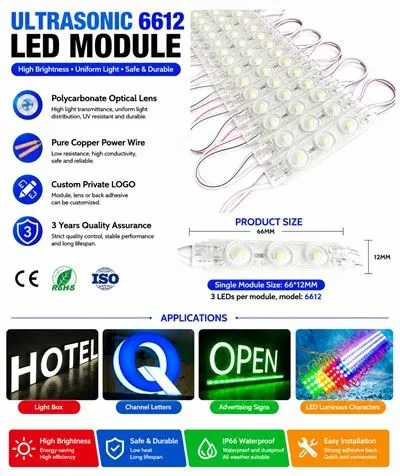
Hey there! As a supplier of 12V LED RGB modules, I often get asked about the power supply requirements for these nifty little devices. So, I thought I'd put together this blog post to shed some light on the topic.
First off, let's talk about what a 12V LED RGB module is. In simple terms, it's a module that combines red, green, and blue LEDs to create a wide range of colors. These modules are super popular for all sorts of applications, from decorative lighting in homes and events to signage and advertising. You can check out our 12 Volt Led Module For Signage for more details on how they're used in signage.
Now, onto the power supply requirements. The "12V" in 12V LED RGB module means that it's designed to operate on a 12 - volt power supply. This is a crucial specification because using the wrong voltage can damage the module or even pose a safety risk.
Why 12V?
A 12 - volt power supply is a common choice for several reasons. For one, it's relatively safe compared to higher voltages. It's less likely to cause serious harm in case of accidental contact, which is important, especially in consumer applications. Also, 12V power supplies are widely available and come in various forms, such as wall adapters, batteries, and power supplies for automotive use.
Power Supply Types
There are a few different types of power supplies you can use for a 12V LED RGB module:
Wall Adapters
Wall adapters are probably the most common choice for indoor applications. They're easy to use - you just plug them into a standard electrical outlet, and they convert the high - voltage AC power from the outlet into 12V DC power that the LED module can use. You can find wall adapters with different current ratings, and it's important to choose one that can supply enough current for your module.
Batteries
Batteries are a great option for portable or off - grid applications. For example, if you're using the LED RGB module in a camping setup or a battery - powered display, batteries can provide the necessary power. Common battery types for 12V applications include lead - acid batteries, lithium - ion batteries, and alkaline batteries. However, keep in mind that batteries have a limited capacity, so you'll need to recharge or replace them periodically.
Automotive Power Supplies
If you're using the 12V LED RGB module in a vehicle, you can use the vehicle's 12V power system. This is handy for things like custom car lighting or interior vehicle decorations. Just make sure to use the appropriate connectors and wiring to ensure a proper and safe connection.
Calculating Power Requirements
To choose the right power supply, you need to calculate the power requirements of your 12V LED RGB module. The power (P) of an electrical device is calculated using the formula P = V × I, where V is the voltage and I is the current.
For a 12V LED RGB module, the voltage (V) is 12 volts. The current (I) rating of the module can usually be found in the product specifications. For example, if a module has a current rating of 0.5 amps, then the power consumption of the module is P = 12V × 0.5A = 6 watts.
It's important to choose a power supply that can provide at least the amount of power required by the module. In fact, it's a good idea to choose a power supply with a slightly higher power rating to account for any inefficiencies or potential power spikes.
Current Considerations
The current rating of the power supply is just as important as the voltage. If the power supply can't provide enough current, the LED RGB module may not operate properly. It might be dimmer than expected, or it could even flicker or shut off.
On the other hand, using a power supply with too high a current rating won't damage the module as long as the voltage is correct. The module will only draw the amount of current it needs.
Wiring and Connectors
Once you've chosen the right power supply, you need to make sure you have the proper wiring and connectors. The wiring should be able to handle the current without overheating. Thicker wires generally have lower resistance and can carry more current safely.


Connectors are also important for a secure and reliable connection. Make sure the connectors are compatible with both the power supply and the LED RGB module. Some modules come with pre - attached connectors, while others may require you to solder or crimp the wires.
Safety Precautions
When working with power supplies and LED RGB modules, safety should always be your top priority. Here are some safety tips:
- Inspect the Power Supply: Before using a power supply, check for any signs of damage, such as frayed wires or cracked casings.
- Proper Grounding: If the power supply requires grounding, make sure it's properly grounded to prevent electrical shocks.
- Avoid Overloading: Don't connect too many LED RGB modules to a single power supply. Make sure the total power consumption of all the connected modules is within the power supply's rating.
Other Related Products
We also offer other types of LED modules that you might be interested in. For example, our 220V Side Light LED Module is designed for applications where a 220 - volt power supply is more convenient. And if you're looking for a specific type of 12V module, our 12v 2835 Injection Led Module is a great option.
Contact Us for Purchase
If you're interested in our 12V LED RGB modules or have any questions about power supply requirements, feel free to reach out. We're here to help you choose the right products for your needs and ensure a smooth purchasing process. Whether you're a DIY enthusiast, a professional installer, or a business owner, we've got the solutions for you.
References
- General knowledge of electrical engineering principles and LED technology.
- Product specifications of 12V LED RGB modules and related power supplies.